Mon - Sat 10:30 AM - 04:30 PM Sunday Closed
Call Us - +91 98880 89761 info@kidneytransplantchandigarh.com

Mon - Sat 10:30 AM - 04:30 PM Sunday Closed
Call Us - +91 98880 89761 info@kidneytransplantchandigarh.com
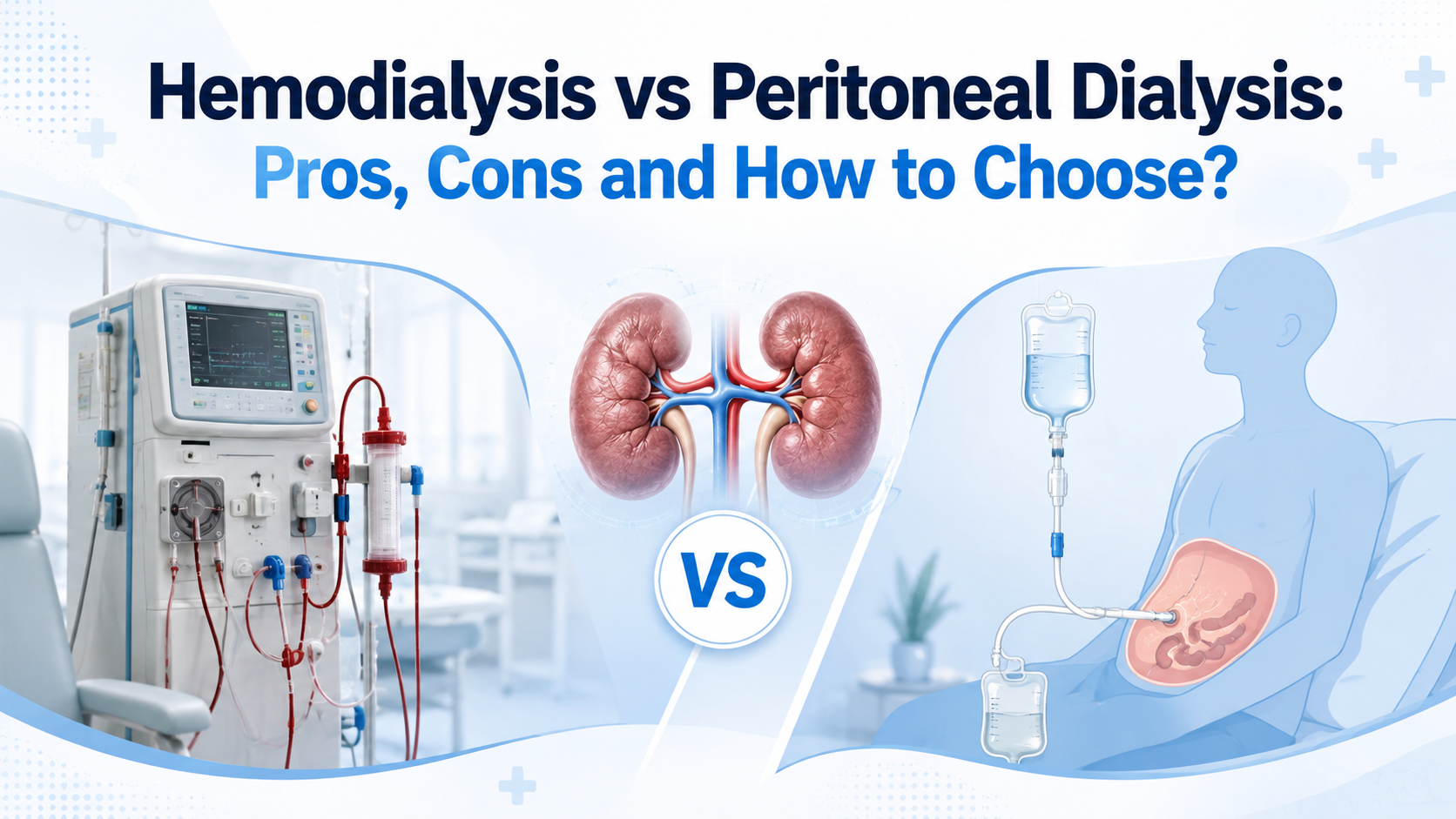
When kidneys are not able to remove enough waste, excess fluid, and certain chemicals from the blood, a person may need kidney replacement therapy. Dialysis is one of the main treatment options for people with advanced kidney failure. There are two major types of dialysis: haemodialysis vs peritoneal dialysis. Both treatments perform some of the functions normally carried out by healthy kidneys, but they work in very different ways.
Understanding hemodialysis vs peritoneal dialysis can help patients and families have a more informed discussion with their nephrologist. But honestly, there is no single dialysis method that is best for everyone. The right choice depends on medical condition, lifestyle, home environment, personal preferences, support system, and the advice of the treating team. Our blog explains how both treatments work, their advantages and disadvantages, and the factors you should consider when deciding between them. Lets understand more about it in detail-
Healthy kidneys filter waste products and excess fluid from the blood. They also help regulate electrolytes, acid-base balance, blood pressure, and several other important functions. When kidney function becomes severely reduced, waste products and fluid can accumulate in the body. Some patients can manage advanced kidney disease with medicines, dietary changes, and other treatments for a period of time. However, when the kidneys can no longer adequately support the body’s needs, dialysis or kidney transplantation may be considered.
Dialysis does not completely replace every function of a healthy kidney but it can remove waste and excess fluid and help maintain a safer internal environment. The two major forms are:
Understanding hemodialysis vs peritoneal dialysis starts with knowing how each treatment works.
How Does Hemodialysis Work?
Haemodialysis uses a dialysis machine and a special filter called a dialyzer to clean the blood.Blood is taken from the patient’s body and passed through the dialyzer. Waste products and excess fluid move out of the blood through the filter. The cleaned blood is then returned to the body. Haemodialysis usually requires a form of vascular access.
This may include:
Many patients receive haemodialysis at a dialysis centre several times each week although treatment schedules can vary. A typical session may last several hours.
There are two commonly used forms:
The exact treatment schedule depends on the patient’s medical needs and the dialysis prescription.
The biggest difference in both the treatments is how the blood is cleaned. With haemodialysis, blood is circulated through an external dialyzer. With peritoneal dialysis, the patient’s peritoneal membrane acts as the filtering surface inside the body. This creates important differences in:
Neither method is automatically better for every patient.
One of the biggest advantages of haemodialysis is that treatment is often performed under the supervision of trained healthcare professionals when done at a dialysis centre. This can be reassuring for patients who do not want to manage dialysis independently at home.
Other potential advantages include:
However individual suitability must always be determined by a nephrologist.
Although haemodialysis is an effective treatment, it can also create practical challenges.
Peritoneal dialysis can offer greater flexibility for some patients.
However, home-based treatment also means patients and caregivers need to learn and consistently follow the dialysis procedure.
Peritoneal dialysis also has potential challenges.
Dietary recommendations vary depending on the patient’s kidney function, dialysis method, urine output, laboratory results, medications, and other medical conditions. Patients on haemodialysis may need careful monitoring of:
Peritoneal dialysis may provide somewhat different dietary considerations because treatment is performed more continuously. However, patients should not make dietary changes based solely on general information found online. A renal dietitian or nephrologist can create a diet plan based on individual laboratory results and treatment needs.
This is one of the most common questions when discussing hemodialysis vs peritoneal dialysis. Peritoneal dialysis can offer more flexibility for some people because it can be performed at home and, depending on the method, can be scheduled around work and daily activities. Centre-based haemodialysis generally follows a fixed schedule. However, freedom is highly individual.
Some patients prefer the structure and professional supervision of a dialysis centre, while others prefer managing dialysis at home. The best option is the one that fits the patient’s health, lifestyle, capabilities, and support system.
Both treatments can potentially be compatible with working, but the practical experience differs. Centre-based haemodialysis requires patients to attend scheduled treatment sessions, which can affect working hours. Peritoneal dialysis may provide greater scheduling flexibility for some patients, particularly with automated overnight treatment. However, work requirements, travel, physical demands, home arrangements, and the patient’s health all need to be considered. A nephrologist and dialysis team can help patients choose a treatment plan that fits their circumstances.
Age alone does not automatically determine whether someone can receive peritoneal dialysis. The decision depends on the patient’s overall health, physical ability, cognitive function, home environment, and availability of caregiver support. Some older patients can successfully perform peritoneal dialysis independently or with assistance from a caregiver.
Others may find centre-based haemodialysis more suitable. The treatment decision should be individualized rather than based only on age.
Peritoneal dialysis can be used in children and younger patients in appropriate circumstances. It can offer flexibility and may allow treatment to take place at home, which can be particularly useful for education and family routines. However, children require specialized medical care and caregiver involvement. A pediatric nephrology team should determine the most appropriate dialysis approach.
Both forms of dialysis have infection-related risks, but the types of infection are different. Haemodialysis patients can develop infections related to vascular access, particularly if a catheter is used. Peritoneal dialysis carries the risk of peritonitis and catheter-related infections. Good hygiene, proper access care, and following the dialysis team’s instructions are important for reducing these risks.
Patients should promptly report signs such as:
Early medical assessment is important when infection is suspected.
When discussing hemodialysis vs peritoneal dialysis, consider more than the treatment itself. Important factors include:
In some situations, patients can switch between dialysis modalities. A person may start with one type and later move to another because of medical, lifestyle, access, infection, or personal reasons. The transition requires planning by the nephrology team. Patients should not change dialysis methods independently. The medical team needs to assess the reason for the change and make sure the new treatment is medically appropriate.
For patients who are medically suitable, kidney transplantation can be an alternative form of kidney replacement therapy. A successful kidney transplant can eliminate the need for regular dialysis, although patients require lifelong medicines and follow-up. Some patients may be evaluated for transplantation before dialysis becomes necessary, while others undergo transplantation after spending time on dialysis. If you have advanced CKD, ask your nephrologist whether you should be evaluated for kidney transplantation.
There is no universal winner in the hemodialysis vs peritoneal dialysis discussion. Haemodialysis may be preferable for someone who values professional supervision and does not want to manage dialysis at home. Peritoneal dialysis may be attractive to someone who values home treatment and greater scheduling flexibility. Medical suitability is equally important. The right choice should be made after discussing your health, lifestyle, home situation, preferences, and long-term treatment goals with a nephrologist.
Before choosing a dialysis method, consider asking:
Having this discussion early can help you make a decision based on your individual needs rather than simply choosing the option that sounds easier.
Understanding hemodialysis vs peritoneal dialysis is an important step for anyone approaching kidney failure. Haemodialysis uses an external machine and dialyzer to clean the blood, while peritoneal dialysis uses the lining of the abdomen as a natural filtering membrane. Both can effectively provide dialysis when appropriately prescribed. Both also have advantages, disadvantages, and potential complications. For some patients, centre-based haemodialysis offers structure and professional supervision. For others, peritoneal dialysis provides the flexibility of home treatment. There is no one-size-fits-all answer.
Your nephrologist can assess your kidney function, overall health, lifestyle, home environment, support system, and long-term treatment goals before recommending the most appropriate option. If you have advanced CKD, don’t wait until you urgently need dialysis to discuss your choices. Early planning can give you more time to understand dialysis, prepare for treatment, and explore kidney transplantation if you are a suitable candidate.
Get Expert Guidance for Dialysis and Kidney Care Today!
Choosing between dialysis options can feel overwhelming, especially when you are already dealing with the challenges of advanced kidney disease. At Kidney Transplant Chandigarh, patients can receive specialized nephrology care, dialysis guidance, evaluation for different kidney replacement options, and kidney transplant assessment when appropriate.
Whether you are considering hemodialysis vs peritoneal dialysis, have recently been advised to start dialysis, or want to understand whether kidney transplantation could be an option, an experienced nephrology team can help you make an informed decision. The right treatment plan should consider not only your medical condition but also your lifestyle, family support, work, travel requirements, and long-term goals.
Speak with the kidney care team at Kidney Transplant Chandigarh to understand your dialysis options and determine the treatment approach that best fits your medical and personal needs.
1. What is the main difference between hemodialysis and peritoneal dialysis?
The main difference is how the blood is cleaned. Haemodialysis uses a dialysis machine and an external dialyzer, while peritoneal dialysis uses the lining of the abdomen as a natural filtering membrane.
2. Which is better, hemodialysis or peritoneal dialysis?
Neither treatment is universally better. The appropriate choice depends on your medical condition, lifestyle, home environment, support system, preferences, and advice from your nephrologist.
3. Can I work while receiving dialysis?
Many patients continue working while receiving dialysis. Peritoneal dialysis may offer more scheduling flexibility for some people, while centre-based haemodialysis follows a regular treatment schedule. Your work and treatment plan should be discussed with your healthcare team.
You're currently offline