Mon - Sat 10:30 AM - 04:30 PM Sunday Closed
Call Us - +91 98880 89761 info@kidneytransplantchandigarh.com

Mon - Sat 10:30 AM - 04:30 PM Sunday Closed
Call Us - +91 98880 89761 info@kidneytransplantchandigarh.com
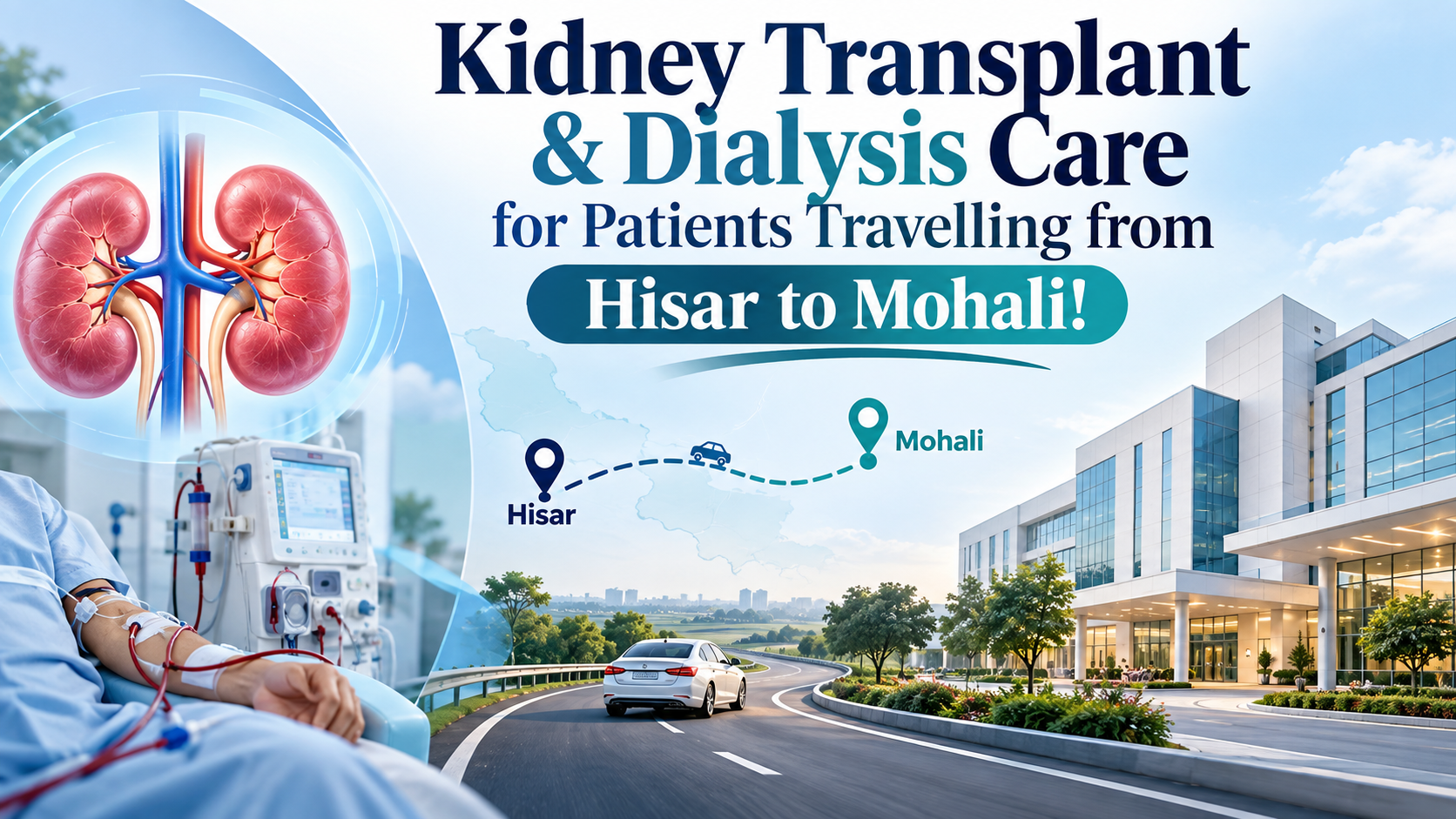
It’s not surprising that living with chronic kidney disease can involve regular medical appointments, repeated investigations, and sessions. When advanced kidney care is not available locally or a patient has been referred to a specialist centre, travelling to another city may become necessary. For patients and families searching for kidney transplant in Hisar services or advanced renal care, Mohali may be considered as a destination for specialist consultation
However, travelling from Hisar to Mohali for kidney treatment requires more preparation than an ordinary hospital visit. Patients undergoing dialysis or living with advanced kidney disease may have restrictions related to fluid intake, diet, medicines, and the timing of dialysis sessions. Those being evaluated for transplantation may also need multiple consultations, investigations, donor assessments, and documentation.
Therefore, patients should plan their journey in consultation with their treating nephrologist and the receiving hospital. Whether you are searching for the best nephrologist Hisar, a dialysis centre Hisar, or a specialised kidney hospital Hisar patients can access for initial care, understanding when referral to a higher centre may be required can make the treatment journey safer and more organised.
Kidney disease covers a wide range of conditions. Some patients require only medicines and periodic monitoring while others develop advanced chronic kidney disease and may eventually require renal replacement therapy in the form of dialysis or kidney transplantation. Patients may be advised to visit a specialised renal centre when the condition becomes complex, kidney function declines considerably, dialysis needs change, complications develop, or transplantation is being considered.
Advanced kidney care can involve a multidisciplinary team consisting of nephrologists, transplant surgeons, urologists, anaesthetists, dietitians, dialysis specialists, and other medical professionals. A transplant programme also requires facilities for donor and recipient evaluation, compatibility testing, surgery, intensive monitoring, and long-term post-transplant management. This does not mean that every patient with kidney disease needs to travel. A best nephrologist in Hisar search may help patients identify appropriate local specialist care for diagnosis, monitoring, and routine treatment. Similarly, a suitable dialysis centre Hisar may allow many patients to continue regular dialysis closer to home.
Travel to Mohali may become relevant when a patient needs specialised evaluation or treatment that the treating doctor recommends at a tertiary-care centre.
Dialysis schedules should be one of the first considerations while planning travel. Haemodialysis is generally performed according to an individual schedule prescribed by the treating team, and patients should not independently delay or skip a session simply because they are travelling. Before leaving Hisar, patients should speak with their nephrologist about the timing of their last dialysis session and whether another session will be required during their stay in Mohali. If dialysis is required at the destination, arrangements should preferably be confirmed before travelling.
Patients should carry relevant medical documents, including recent prescriptions, dialysis records, laboratory reports, discharge summaries, imaging reports, details of allergies, and information about existing medical conditions. Medicines should be carried in sufficient quantities for the entire journey, with some additional supply in case the return is unexpectedly delayed. Patients should not alter blood-pressure medicines, diabetes medicines, phosphate binders, or other prescribed treatments without medical advice.
Diet and fluid intake are equally important. Travelling can tempt patients to consume packaged snacks, salty foods, restaurant meals, or excessive beverages. However, dialysis patients may have individual restrictions involving sodium, potassium, phosphorus, or fluids. The dietary advice provided by the nephrologist or renal dietitian should continue during travel.
Patients who normally receive treatment at a dialysis centre Hisar should ask for a concise dialysis summary before travelling. This can make communication with the destination hospital easier if dialysis or emergency treatment becomes necessary.
Kidney transplantation can be a treatment option for suitable patients with end-stage kidney disease, but eligibility is determined through detailed medical assessment. A transplant is not automatically appropriate for every person with kidney failure.
For someone exploring kidney transplant Hisar options, the first step should generally be consultation with a qualified nephrologist. The doctor can assess kidney function, overall health, existing diseases, dialysis status, and whether referral to a transplant centre is appropriate. Transplant evaluation commonly involves a series of investigations to assess the recipient’s fitness for surgery and identify factors that could affect transplant outcomes. The potential donor, where living kidney donation is being considered, also requires an independent and comprehensive medical assessment. Kidney donation and transplantation in India are governed by applicable laws and regulatory procedures. Hospitals and patients must follow the required processes relating to donor evaluation, consent, documentation, and authorisation. Patients should therefore avoid treating transplantation as merely a surgical appointment. It is a carefully regulated medical process requiring assessment before surgery and lifelong follow-up afterward.
Choosing kidney care should be based on clinical requirements rather than advertisements or a single online claim. When searching for the best nephrologist, Hisar, patients should consider the doctor’s qualifications, experience in managing chronic kidney disease, accessibility for follow-up, hospital support, and ability to coordinate care if referral to a transplant centre becomes necessary. For dialysis, patients should consider whether the facility follows appropriate infection-control practices, has trained dialysis staff, maintains adequate monitoring during treatment, and has access to medical support if complications occur.
When considering a kidney hospital in Hisar or a specialist centre in Mohali, it is also useful to understand the range of renal services available. Depending on the patient’s needs, these may include nephrology consultations, haemodialysis, critical-care nephrology, transplant evaluation, transplant surgery, and post-transplant follow-up.
For transplant patients, the quality of post-transplant care is as important as the operation itself. Regular monitoring is required after transplantation, and medicines prescribed to prevent rejection must be taken exactly as directed. Patients should therefore discuss how follow-up will be coordinated once they return to Hisar.
Good organisation can significantly reduce the stress associated with intercity kidney treatment. Before travelling, patients should confirm their appointment, understand whether fasting or specific investigations are required, and ask which previous reports should be brought. Patients undergoing transplant evaluation may have several appointments rather than a single consultation. Families should ask the hospital beforehand about the expected evaluation process so that travel and accommodation can be planned accordingly. After treatment in Mohali, patients should obtain a clear discharge or consultation summary. It should ideally explain the diagnosis, treatment provided, medicines, required investigations, warning symptoms, and recommended date of follow-up. This information can then be shared with the treating nephrologist or dialysis centre Hisar after returning home.
Transplant recipients should follow the specific warning-sign instructions provided by their transplant team and should contact the treating hospital promptly if concerning symptoms develop.
Travelling from Hisar to Mohali for advanced kidney care can be managed more effectively when patients plan their treatment, dialysis schedule, medical records, medicines, and follow-up in advance. The decision to travel should be based on individual medical requirements and advice from qualified healthcare professionals.
For patients searching for kidney transplant Hisar, the journey may begin with a local nephrology consultation followed by referral to an appropriate transplant centre when required. A reliable dialysis centre Hisar can remain important for ongoing dialysis before or after specialist consultations, while an appropriate kidney hospital Hisar can provide continuity of care closer to home.
Most importantly, kidney treatment should be viewed as a long process rather than a single hospital visit. Coordination between the patient’s local nephrologist team and the specialist team in Mohali can help ensure that investigations, dialysis, transplantation, medicines, and long-term follow-up remain connected. If you are looking for an expert consultation, don’t forget to get in touch with specialists at Kidney Transplant Chandigarh!
You're currently offline