Mon - Sat 10:30 AM - 04:30 PM Sunday Closed
Call Us - +91 98880 89761 info@kidneytransplantchandigarh.com

Mon - Sat 10:30 AM - 04:30 PM Sunday Closed
Call Us - +91 98880 89761 info@kidneytransplantchandigarh.com
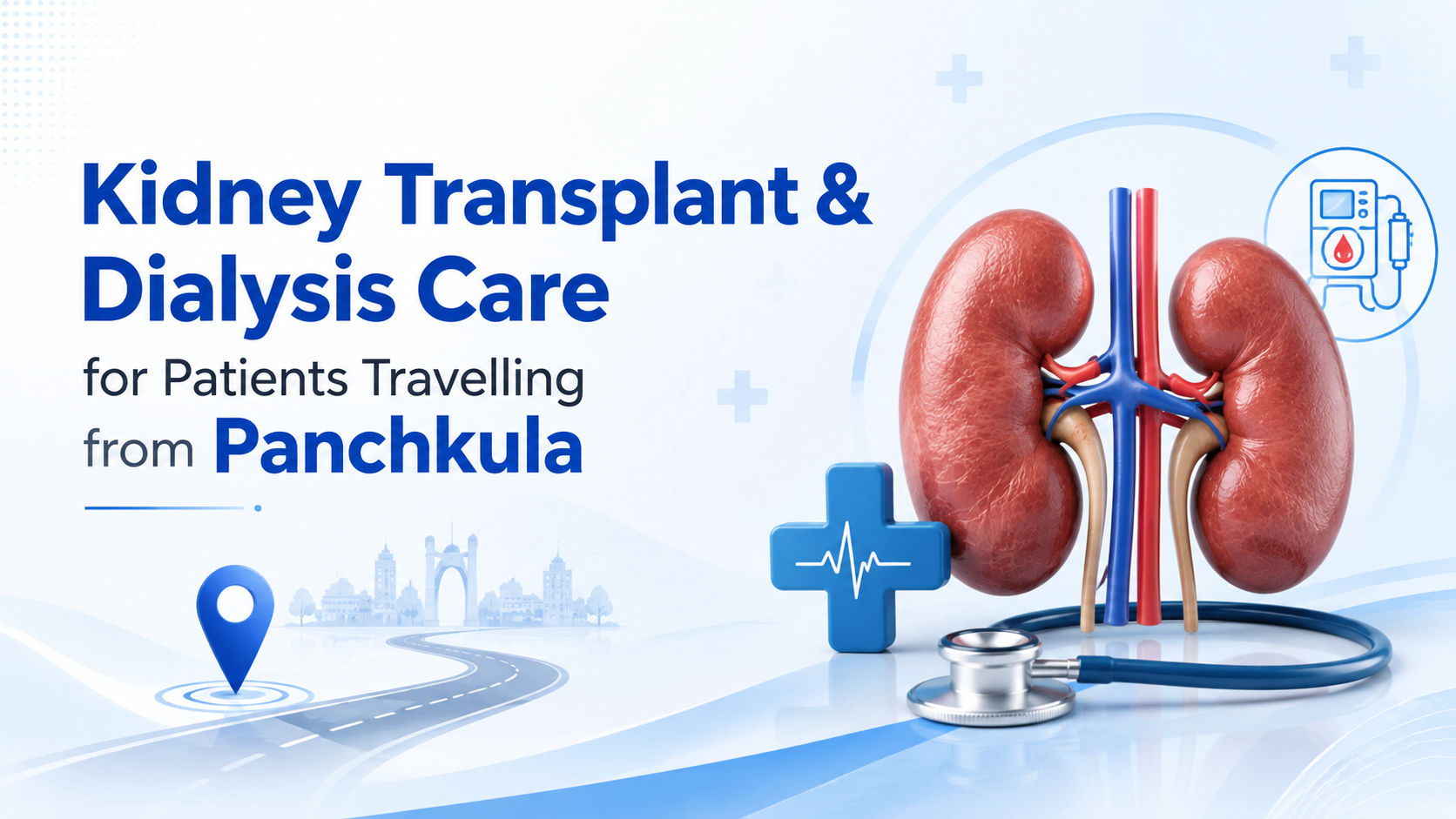
For patients who are dealing with advanced kidney disease, choosing the right place for treatment is a very important decision. When kidney function becomes highly affected, patients may need regular dialysis, kidney transplantation, or both at different stages of their treatment.
If you or any of your family members are searching for kidney transplant Panchkula, nearby Chandigarh can be an important destination for specialized kidney care. Patients from Panchkula can access experienced nephrologists, surgeons, dialysis services, diagnostic facilities, and long-term follow-up care without having to travel very far from home.
However, when it’s about choosing kidney care it is about more than finding the nearest hospital. Kidney disease often requires long-term treatment, and transplantation involves several stages, from initial evaluation and donor testing to surgery and lifelong follow-up. Our blog will today highlight the treatment options available to patients travelling from Panchkula, when dialysis or transplantation may be considered, and what families should look for when choosing a kidney transplant centre.
Panchkula is located close to Chandigarh and this makes it practical for patients to travel for specialized medical treatment. While routine kidney care may be available locally, some patients require more advanced services when their kidney disease becomes complicated or progresses to kidney failure.
Patients may travel to a specialized kidney centre for:
For someone researching kidney transplant Panchkula, it is useful to consider the complete treatment journey rather than focusing only on the location of the hospital.
The kidneys remove waste products and excess fluid from the blood. It helps maintain the body’s electrolyte balance and perform several other important functions. When kidney function becomes severely reduced, waste and fluid can build up in the body. Depending on the patient’s condition, doctors may recommend dialysis.
Dialysis may be considered when kidney function is no longer sufficient to maintain the body’s needs and the patient develops symptoms or complications that cannot be adequately managed with medicines and dietary changes alone.
Two common forms of dialysis are haemodialysis and peritoneal dialysis.
What Is Haemodialysis?
Haemodialysis is a process that uses a dialysis machine to remove waste and excess fluid from the blood. Blood passes through a special filter called a dialyzer before being returned to the body. Patients generally require treatment on a regular schedule, often several times a week. For patients travelling from Panchkula, convenience and accessibility become important considerations because dialysis involves repeated visits. Patients should consider factors such as:
A nephrologist can recommend the most appropriate dialysis plan based on the patient’s health.
Peritoneal dialysis uses the lining of the abdomen as a natural filter process. A special dialysis solution is introduced into the abdomen through a catheter. It helps waste products and excess fluid move into this solution, which is then drained accordingly. Depending on the treatment method, peritoneal dialysis may be performed manually during the day or using a machine at night. But one important thing to note is that not every patient is suitable for peritoneal dialysis. The choice depends on medical condition, lifestyle, home circumstances, and the patient’s ability to follow the treatment safely.
Kidney transplantation should ideally be discussed before kidney failure becomes an emergency. Patients with advanced or progressively worsening CKD can be evaluated by a transplant team to determine whether transplantation is appropriate. Early evaluation allows doctors to:
In selected patients, doctors may consider a pre-emptive kidney transplant, which means transplantation before long-term dialysis becomes necessary. Therefore, patients searching for kidney transplant Panchkula should consider seeking transplant advice early rather than waiting until dialysis becomes unavoidable.
What Is a Kidney Transplant?
A kidney transplant is a surgical procedure in which a healthy kidney from a selected donor is placed into a patient whose kidneys are no longer functioning adequately. The kidney may come from:
During surgery, the donor kidney is usually placed in the lower abdomen. Its blood vessels are connected to blood vessels in the recipient, and the ureter is connected to the bladder. The patient’s original kidneys usually remain in place unless there is a specific medical reason to remove them. After transplantation, patients require anti-rejection medicines to reduce the risk of their immune system attacking the new kidney.
A family member may be considered as a living donor if they meet the required medical and legal criteria. Potential donors undergo a detailed evaluation to make sure that kidney donation is reasonably safe for them. Evaluation may include:
The donor’s health and safety remain a major priority throughout the process.
What If the Donor and Recipient Have Different Blood Groups?
A blood group mismatch does not necessarily mean that transplantation is impossible. There are selected cases, when an ABO-incompatible kidney transplant may be considered. Specialized treatment can be used to reduce certain antibodies before transplantation. Another possible option, where available and applicable, may be paired kidney exchange.The transplant team can determine which option is appropriate after detailed testing of both donor and recipient.
What Should Patients Look for in a Kidney Transplant Centre?
Choosing the right transplant centre is an important decision. Patients should consider whether the centre provides comprehensive care, including:
For many patients, the close proximity of Panchkula and Chandigarh makes travelling for specialized kidney treatment practical. This can be especially helpful for patients who require:
For patients searching for kidney transplant Panchkula, accessibility can be an important advantage. Being relatively close to home can make repeated follow-up appointments easier for patients and their families. At the same time, treatment quality, transplant expertise, facilities, and continuity of care should remain important considerations.
Successful transplantation requires lifelong care. After surgery, doctors regularly monitor the transplanted kidney and the patient’s overall health.
Follow-up may include:
Patients must take their anti-rejection medicines exactly as prescribed. They should also contact their medical team if they develop symptoms such as fever, reduced urine output, swelling, unexplained pain, or other unusual changes. Early medical attention can help doctors identify complications and provide appropriate treatment.
Patients can make their first consultation more useful by carrying previous medical records. These may include:
If a family member is interested in becoming a living donor, the patient should mention this during the consultation so that the transplant team can explain the donor evaluation process.
Importance of Early Evaluation-
One of the biggest advantages of early transplant evaluation is preparation. Doctors have more time to identify suitable donors, complete investigations, manage other medical conditions, and explain the different treatment options. Early evaluation can also help patients understand whether they may be candidates for transplantation before dialysis becomes necessary. For families looking for kidney transplant Panchkula, speaking with a transplant specialist early can provide clarity about what lies ahead.
Advanced kidney disease can be challenging for both patients and their families, but timely medical care can provide several treatment options. Dialysis can replace some important kidney functions and remain an essential treatment for many patients. For those who are medically suitable, kidney transplantation can offer freedom from regular dialysis and the possibility of a more active lifestyle. For patients travelling from Panchkula, Chandigarh provides access to specialized kidney and transplant care while allowing them to remain relatively close to home.
The most important step for you is to seek expert advice early, understand your options, and choose a transplant centre that can provide comprehensive care before and after surgery.
If you are searching for kidney transplant Panchkula or specialized dialysis and kidney care, Kidney Transplant Chandigarh can help you understand your treatment options. The team provides comprehensive kidney care, including nephrology consultations, dialysis management, living-donor evaluation, transplant assessment, kidney transplant surgery, and post-transplant follow-up. Patients travelling from Panchkula can receive guidance throughout their treatment journey, from the first consultation and investigations to transplantation and long-term monitoring.
Contact Kidney Transplant Chandigarh to schedule a consultation and discuss the most appropriate kidney treatment options for you or your loved one.
1. Can patients from Panchkula get a kidney transplant in Chandigarh?
Yes. Patients from Panchkula can seek kidney transplant evaluation and treatment at specialized centres in Chandigarh. Eligibility depends on the patient’s medical condition and detailed assessment by the transplant team.
2. Can a patient receive a kidney transplant while on dialysis?
Yes, many patients receive a kidney transplant after starting dialysis. Patients should also discuss transplantation early because some medically suitable patients may be considered for pre-emptive transplantation.
3. Can a family member donate a kidney?
A family member may be considered as a living donor if they meet the applicable medical and legal requirements. The donor must undergo detailed evaluation to ensure that donation is appropriate and reasonably safe.
You're currently offline