Mon - Sat 10:30 AM - 04:30 PM Sunday Closed
Call Us - +91 98880 89761 info@kidneytransplantchandigarh.com

Mon - Sat 10:30 AM - 04:30 PM Sunday Closed
Call Us - +91 98880 89761 info@kidneytransplantchandigarh.com
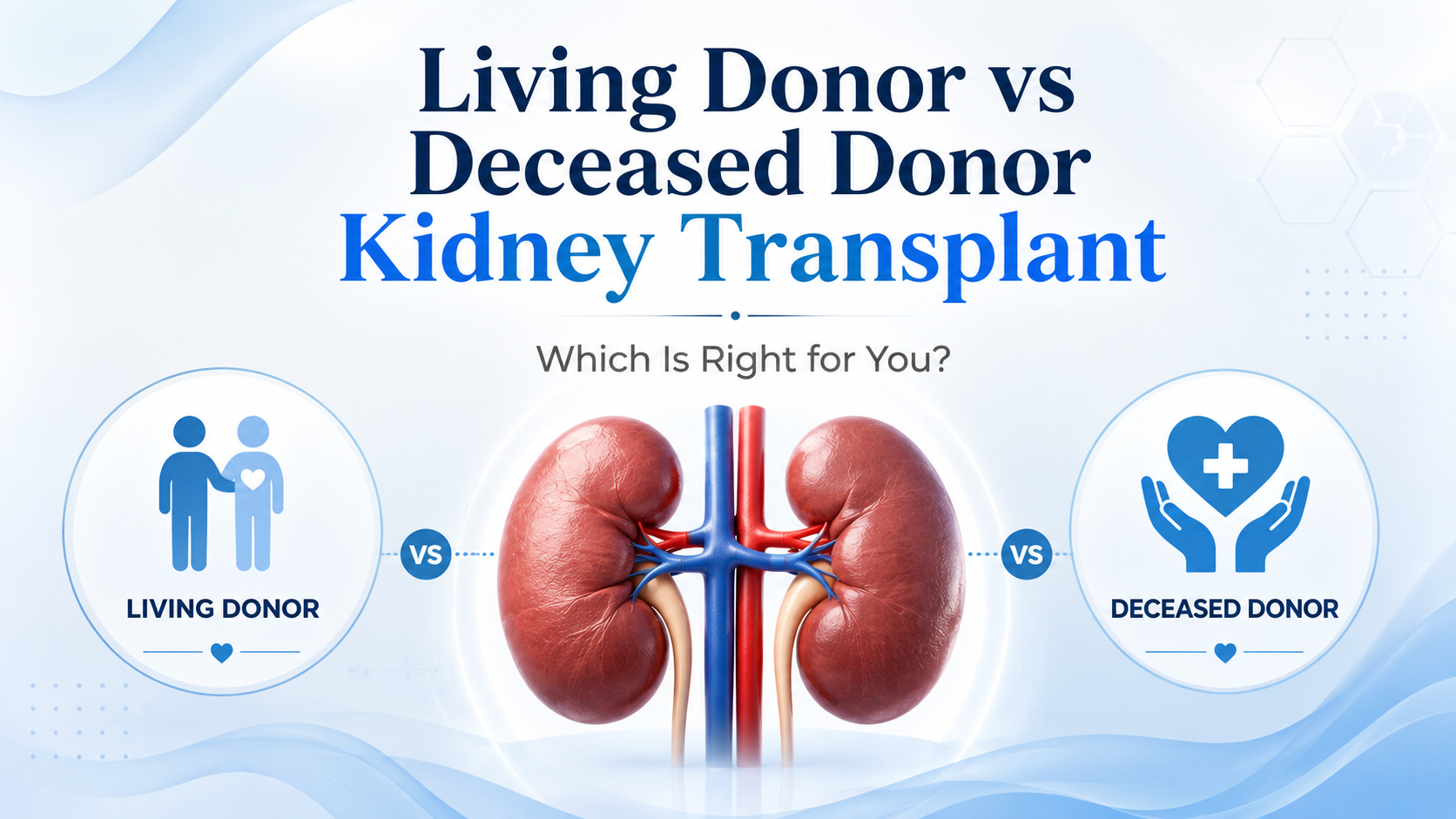
Kidney transplantation is considered as one of the most effective treatments for people who are dealing with end-stage kidney disease (ESKD). For many patients, a successful kidney transplant offers a better quality of life, and improved long-term survival compared to long-term dialysis. However, one of the most important decisions patients and their families face is choosing between a living donor vs deceased donor kidney transplant.
While both options can successfully restore kidney function, they differ in several aspects, including waiting time, donor evaluation, transplant outcomes, risks, and long-term success. Understanding these differences is important as it helps patients make informed decisions in consultation with their nephrologist and transplant team.
In our blog, we will explain everything you need to know about living donor vs deceased donor kidney transplant, including their advantages, limitations, eligibility criteria, and factors to consider when deciding which option may be right for you.
A kidney transplant is a surgical procedure in which a healthy kidney from a donor is implanted into a person whose kidneys can no longer function effectively.
Unlike dialysis, which temporarily performs some of the kidneys’ filtering functions, a kidney transplant replaces the lost kidney function, allowing many patients to return to a more active and fulfilling life.
Kidney donors generally fall into two categories:
Both options save lives, but understanding living donor vs deceased donor kidney transplant is essential because each has unique benefits and challenges.
A living donor kidney transplant involves receiving a healthy kidney from a living person. Because humans can live healthy lives with one functioning kidney, eligible individuals can donate one kidney without significantly affecting their own health.
Living donors may include:
Before donation, every potential donor undergoes extensive medical and psychological evaluation to ensure donation is safe for both donor and recipient.
A deceased donor kidney transplant uses kidneys donated by individuals who have suffered irreversible brain death or, in some cases, circulatory death, and whose families or prior consent have authorized organ donation.
These donated kidneys are allocated through a regulated organ allocation system based on medical urgency, compatibility, blood group, tissue matching, and other clinical factors.
Because the availability of deceased donor kidneys is limited, patients often spend months or years on a transplant waiting list.
Several factors contribute to the success of living donor transplants.
These advantages explain why many specialists consider living donation the preferred option whenever possible.
Although living donor transplantation often offers better outcomes, deceased donor transplantation remains an excellent treatment option.
Benefits include:
Many patients enjoy excellent long-term health after receiving a deceased donor kidney.
Potential living donors usually must:
Every transplant center follows strict medical and ethical guidelines to protect donor safety.
Before transplantation, doctors perform several tests to ensure compatibility.
These include:
Even if family members are not perfect matches, advances in transplantation have made successful outcomes possible through specialized protocols in many cases.
Living kidney donation is generally considered safe, but like any surgery, it carries some risks.
Possible short-term risks include:
Long-term studies show that carefully selected living donors usually maintain normal kidney function and enjoy healthy lives after donation. Donors continue to receive regular follow-up care to monitor their health.
Whether the kidney comes from a living or deceased donor, recipients require lifelong medical care.
Potential risks include:
Fortunately, advances in immunosuppressive therapy have significantly improved transplant success rates over the past few decades.
Choosing between living donor vs deceased donor kidney transplant depends on several factors, including:
For many patients, living donor transplantation offers the shortest waiting time and the best long-term outcomes. However, if a suitable living donor is not available, a deceased donor transplant remains an excellent option that can dramatically improve both quality of life and survival.
Every patient’s situation is unique, making personalized medical evaluation essential.
Preparation begins long before surgery.
Patients are encouraged to:
Good preparation improves recovery and long-term transplant outcomes.
A successful kidney transplant can transform daily life.
Many recipients experience:
However, lifelong follow-up remains essential. Patients must take prescribed immunosuppressive medications exactly as directed and attend regular medical check-ups to monitor kidney function.
Understanding living donor vs deceased donor kidney transplant empowers patients and families to make informed treatment decisions. Both types of kidney transplantation have helped thousands of people regain their health and improve their quality of life.
A living donor transplant often provides shorter waiting times and excellent long-term outcomes, while a deceased donor transplant offers hope for patients who do not have a suitable living donor. The right choice depends on your individual medical condition, donor availability, and guidance from an experienced transplant team.
Early evaluation and timely referral to a transplant center can increase your treatment options and improve the likelihood of a successful outcome.
If you or a loved one has advanced kidney disease and is considering transplantation, expert guidance can make all the difference.
At Kidney Transplant Chandigarh, our experienced nephrologists and kidney transplant specialists provide comprehensive care at every stage of the transplant journey—from detailed evaluations and donor compatibility assessments to transplant surgery and long-term follow-up care. Whether you’re exploring a living donor vs deceased donor kidney transplant, our multidisciplinary team works closely with each patient to recommend the most suitable treatment plan based on individual needs and medical condition.
We are committed to delivering compassionate, evidence-based care while supporting patients and their families through every step of the transplant process.
Ready to explore your kidney transplant options? Contact Kidney Transplant Chandigarh today to schedule a consultation and learn how our expert team can help you achieve the best possible outcome.
1. Which is better: a living donor or deceased donor kidney transplant?
In general, living donor kidney transplants tend to have shorter waiting times and slightly better long-term outcomes because the donor is carefully evaluated and the surgery is planned. However, deceased donor kidney transplants are also highly successful and remain an excellent option for many patients.
2. How long does a transplanted kidney last?
The lifespan of a transplanted kidney varies depending on several factors, including donor type, overall health, medication adherence, and follow-up care. Many transplanted kidneys continue to function well for many years, and some last for decades.
3. Can a person live a normal life after donating a kidney?
Yes. Most healthy living kidney donors recover fully and continue to live normal, active lives with one healthy kidney. Donors undergo thorough medical evaluation before surgery to ensure donation is safe.
4. Will I need medications after a kidney transplant?
Yes. Kidney transplant recipients must take immunosuppressive (anti-rejection) medications for life to help prevent the immune system from rejecting the transplanted kidney. Regular follow-up with the transplant team is essential to monitor kidney function and adjust medications as needed.
You're currently offline