Mon - Sat 10:30 AM - 04:30 PM Sunday Closed
Call Us - +91 98880 89761 info@kidneytransplantchandigarh.com

Mon - Sat 10:30 AM - 04:30 PM Sunday Closed
Call Us - +91 98880 89761 info@kidneytransplantchandigarh.com
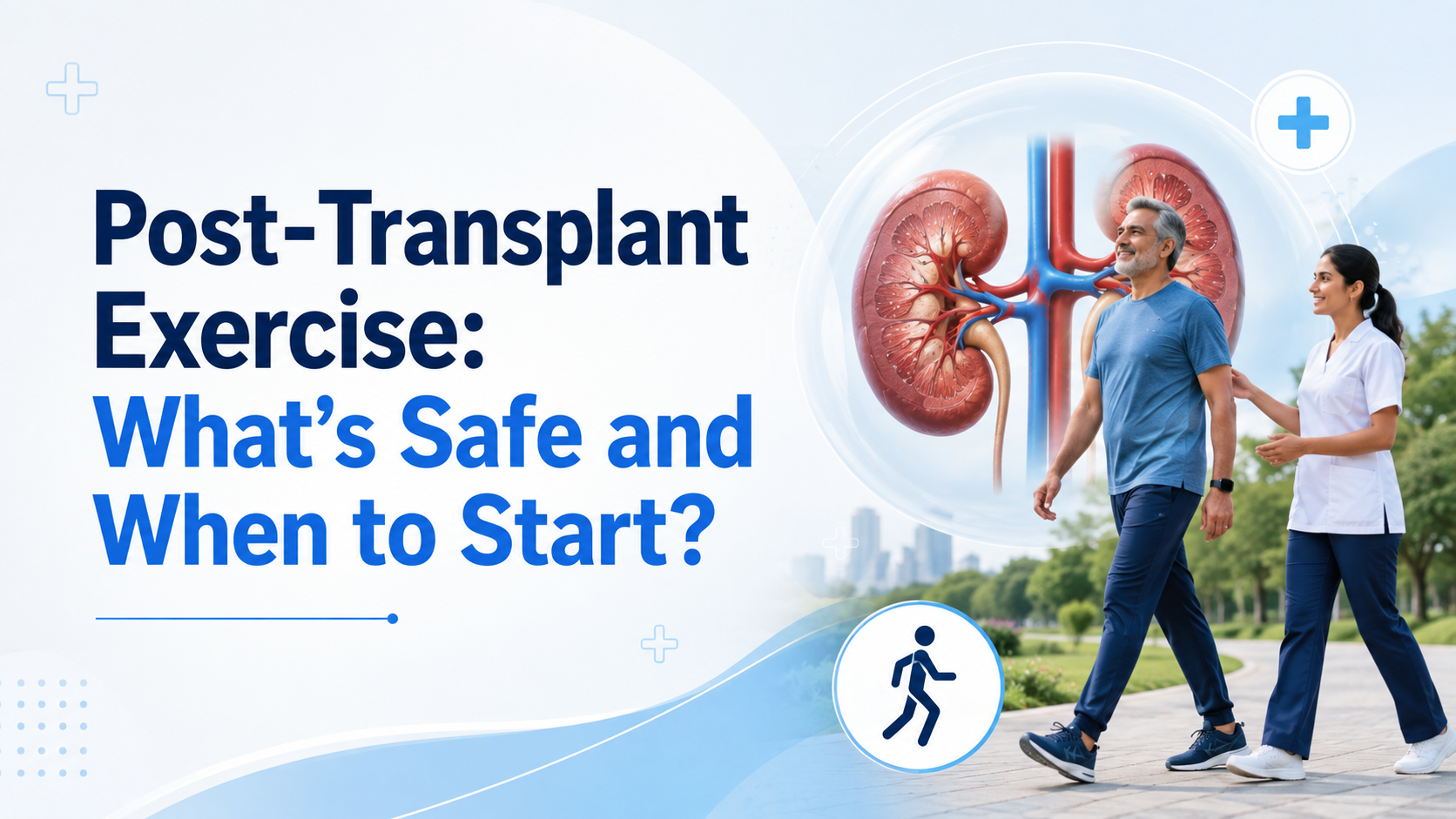
A kidney transplantation can bring a lot of changes to one’s life. After spending months or years managing chronic kidney disease, dialysis, dietary restrictions, and frequent medical appointments there are patients who look forward to becoming more active again. But an important thing to note is that exercise can be an important part of that recovery. However, getting back into physical activity after a kidney transplant should be gradual. It’s because the body needs time to heal from major surgery, and the transplanted kidney needs careful monitoring. Patients also take immunosuppressive medicines that can affect strength, blood pressure, blood sugar, weight, and overall recovery.
Understanding exercise after kidney transplant can help patients return to physical activity safely and confidently. The goal is not to start exercising as quickly or intensely as possible. The goal is to gradually rebuild strength, improve fitness, and develop an active lifestyle without putting unnecessary strain on the body. Let’s read through our blog to learn more about it in detail-
Exercise is more than a way to lose weight. Regular physical activity can support overall health and quality of life after transplantation. Once medically cleared, exercise may help:
Some patients may feel weak after surgery or after a long period of reduced physical activity. This is understandable. The right exercise programme can gradually help rebuild strength. However, recovery is different for every patient. The type and intensity of activity should be based on medical advice and the individual’s recovery.
There is no single date when every transplant patient should start exercising. The timing depends on:
In many cases, gentle movement and short walks are encouraged relatively early after surgery, sometimes while the patient is still recovering in hospital. The important distinction is between movement and strenuous exercise. Walking short distances may be encouraged early, while heavy lifting, intense abdominal exercises, contact sports, and high-intensity workouts usually need to wait until adequate healing has occurred. Your transplant team should determine when you can progress from one stage to another.
The first goal is simply to get moving safely and keep yourself fit. Walking is often a practical starting point. You might begin with:
Don’t worry about speed. At this stage, consistency is more important than intensity. If you become unusually breathless, dizzy, weak, or develop significant pain, stop and inform your healthcare team. As your strength improves, your walking distance can gradually increase.
As recovery continues, your transplant team may allow you to increase your activity. A simple progression might involve:
Stage 1: Short, easy walks
Stage 2: Longer walks at a comfortable pace
Stage 3: Regular moderate activity
Stage 4: Structured aerobic and strengthening exercises after medical clearance
The exact timeline differs from patient to patient. Trying to progress too quickly can be counterproductive. Your body has already undergone major surgery, and recovery requires patience.
Walking is one of the simplest activities to restart after transplantation. It requires little equipment, can be adjusted to your fitness level, and can be performed indoors or outdoors depending on your condition. Walking can help improve:
Start slowly and gradually increase the distance. Once your doctor allows more activity, you can introduce other forms of exercise according to your abilities and interests.
Strength training can be useful after a kidney transplant, particularly because prolonged illness and dialysis may contribute to muscle loss and weakness. However, strengthening exercises should not be started aggressively immediately after surgery. The abdominal area needs time to heal, and heavy lifting can put unnecessary strain on healing tissues.
Your transplant team may eventually recommend:
The amount of weight and number of repetitions should increase gradually. Never assume that because you feel better, you are automatically ready to lift heavy weights.
Yes, many patients who undergo transplant can eventually return to a gym. But it is essential to note that the timing matters. Before returning to gym workouts, discuss your plans with your transplant team. When you are cleared to return, begin with low-intensity exercises rather than immediately attempting your previous workout routine.
For example, you might begin with:
Avoid comparing your current performance with what you could do before kidney disease. Your goal is to rebuild fitness not prove how much you can lift.
Running may be possible for many patients after appropriate recovery and medical clearance. However, running is a higher-impact activity than walking and places greater demands on the cardiovascular and musculoskeletal systems. A sensible progression may be:
You do not need to run to be healthy. If you enjoy running and your medical team considers it appropriate, it can eventually become part of your fitness routine.
Swimming can provide excellent cardiovascular exercise with relatively low impact on joints. However, patients should wait until the surgical wound has completely healed and their transplant team confirms that swimming is safe. This is particularly important because an incompletely healed surgical wound can increase infection risk. Once medically cleared, swimming can be gradually introduced. Pay attention to hygiene and avoid swimming if you have an open wound or your medical team has advised against it.
Specific Exercises to Avoid
During the early recovery period, certain activities should generally be avoided until your transplant team gives you clearance. These may include:
Contact sports require particular consideration because trauma to the transplanted kidney could potentially cause serious injury. If you participate in a sport that involves physical contact, discuss the risks with your transplant team before returning.
The transplanted kidney is generally placed in the lower abdomen rather than in its original position. This means patients need to be mindful of activities that place significant strain or direct pressure on the abdominal region. Exercises such as intense sit-ups, heavy lifting, or other high-pressure movements may need to be delayed.Your doctor or physiotherapist can recommend safer ways to strengthen your core as your surgical wound heals.
Weight gain can often occur after transplantation in some patients. Improved appetite, reduced dietary restrictions, medication effects, and increased food intake can contribute to changes in body weight. Regular physical activity can help support healthy weight management. However, exercise should be combined with appropriate nutrition. Rather than focusing only on the number on the weighing scale aim to improve:
A transplant dietitian can help develop an appropriate nutrition plan.
Regular physical activity can support cardiovascular health and may help with blood pressure and blood sugar management. This can be particularly relevant after transplantation because some anti-rejection medicines may affect blood pressure, blood sugar, cholesterol, or body weight. Exercise should therefore be viewed as one part of a broader health plan that may include:
Never change prescribed medicines because you have started exercising.
Exercise should not leave you feeling seriously unwell. Stop exercising and seek medical advice if you experience concerning symptoms such as:
Some symptoms may have nothing to do with exercise, but transplant recipients should take significant changes seriously. When in doubt, contact your transplant team.
Once you are medically cleared, consistency is more valuable than extreme workouts. Instead of trying to exercise intensely for a few days and then stopping, build a routine that you can maintain.
Try to:
Exercise should become part of your lifestyle rather than a temporary project.
Some patients may benefit from working with a physiotherapist, particularly if they have significant weakness after prolonged illness or hospitalization. A physiotherapist can help with:
Patients who are unsure how to restart physical activity can ask their transplant team whether supervised rehabilitation would be appropriate.
The most important rule is simple:
Understanding exercise after kidney transplant is an important part of building a healthy life following transplantation. Exercise can improve strength, stamina, cardiovascular fitness, mood, and overall quality of life. But the safest approach is gradual progression. Walking is often a practical starting point. As recovery progresses and the transplant team gives clearance, patients may be able to add cycling, swimming, resistance training, jogging, or other activities. Heavy lifting, contact sports, and strenuous abdominal exercises require particular caution. The most important thing is to listen to your body and follow individualized medical advice.
Get Expert Guidance on Life After Kidney Transplant
Returning to exercise after transplantation can raise many questions: When can I walk? When can I lift weights? Can I run? Can I swim? How much exercise is safe? At Kidney Transplant Chandigarh, patients can receive comprehensive guidance throughout their transplant journey, including post-transplant monitoring and advice regarding healthy lifestyle changes. Your transplant team can assess your recovery, kidney function, medications, surgical healing, and overall health before advising you on increasing physical activity. Whether you are newly recovering from transplant surgery or looking to return to an active lifestyle, personalized medical guidance can help you exercise with greater confidence.
Contact Kidney Transplant Chandigarh for expert post-transplant care and discuss when and how you can safely return to exercise after kidney transplant.
Frequently Asked Questions
1. When can I start exercise after a kidney transplant?
Light movement and walking may be introduced relatively early, depending on your recovery. More strenuous exercise should wait until your transplant team confirms that it is safe. The exact timeline varies between patients.
2. Is walking safe after a kidney transplant?
Walking is often a good starting activity during recovery. Begin with short, comfortable walks and gradually increase the duration as your strength improves and your doctor permits.
3. Can I lift weights after a kidney transplant?
Strength training may eventually become part of your exercise routine, but heavy lifting should be avoided during the early recovery period. Your transplant team can tell you when resistance training is appropriate and how much weight is safe.
You're currently offline