Mon - Sat 10:30 AM - 04:30 PM Sunday Closed
Call Us - +91 98880 89761 info@kidneytransplantchandigarh.com

Mon - Sat 10:30 AM - 04:30 PM Sunday Closed
Call Us - +91 98880 89761 info@kidneytransplantchandigarh.com
Not necessarily.
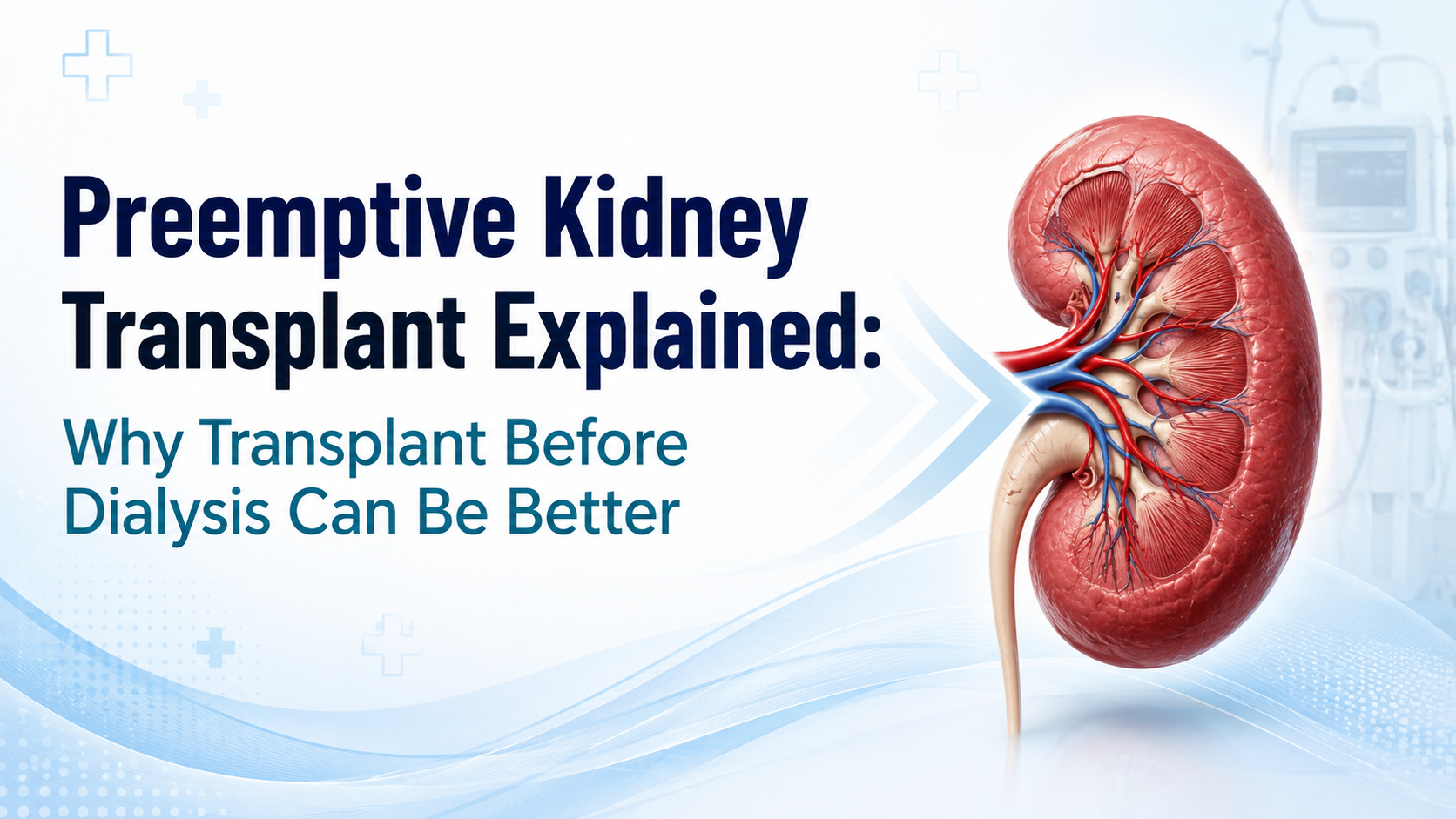
When kidney function is declining toward kidney failure, a transplant team may evaluate whether transplantation can be planned before a patient needs long-term dialysis. In suitable patients, this approach may offer important advantages, including avoiding or reducing exposure to dialysis and potentially improving quality of life. However, a preemptive transplant is not appropriate for everyone. It requires careful medical evaluation, timely planning, a suitable donor or access to a deceased-donor transplant pathway, and coordination with a transplant team.
So, what exactly is a preemptive transplant, who can benefit from it, and how does the process work? Let’s take a closer look.
A preemptive kidney transplant is a transplant performed before a person with advanced kidney disease starts dialysis. Normally, when the kidneys can no longer adequately filter waste and maintain fluid and electrolyte balance, kidney replacement therapy may become necessary. Kidney replacement therapy can include dialysis or kidney transplantation.
In a preemptive transplant, the transplant is planned before dialysis is initiated, provided the patient meets the medical requirements for transplantation. This does not mean that everyone with chronic kidney disease should immediately undergo transplantation. The decision depends on the patient’s kidney function, overall health, symptoms, suitability for surgery, transplant evaluation and donor availability. The objective is to transition to a functioning transplanted kidney without requiring a prolonged period of dialysis beforehand.
This is one of the most common questions patients and families have. Dialysis can be a life-sustaining treatment, but it also requires significant time, medical access and lifestyle adjustments. Depending on the type of dialysis, patients may need regular visits to a dialysis centre or perform treatment at home according to a prescribed schedule. If a suitable transplant can be safely performed before dialysis is required, the patient may be able to avoid some of the physical, emotional and practical challenges associated with dialysis.
A successful transplant can also provide kidney function that more closely resembles natural kidney function than dialysis. However, transplantation is major surgery and lifelong follow-up is definitely required. It is not simply a way of “skipping” treatment without careful consideration.
For appropriate candidates, transplantation before dialysis may provide several potential advantages.
However, outcomes depend on numerous factors, including the patient’s health, donor characteristics, transplant centre, immunological compatibility and post-transplant care.
It is important not to think of this as a simple “transplant versus dialysis” choice. Dialysis and transplantation are different forms of kidney replacement therapy. Dialysis can keep a person alive when kidney function is severely reduced, while transplantation provides a functioning donor kidney. A kidney transplant can offer greater independence from dialysis, but it requires surgery, lifelong immunosuppressive medicines and regular medical follow-up.
For a patient who is medically suitable and has access to a suitable donor, transplantation before dialysis may be an attractive option. But if a patient does not have a suitable donor or cannot undergo transplantation safely at that stage, dialysis may be necessary while transplant evaluation continues. The right approach should always be determined by the patient’s transplant team.
Not everyone with chronic kidney disease is automatically eligible. A transplant team generally considers factors such as:
The evaluation is comprehensive because transplantation involves much more than the surgical procedure itself.
One of the biggest mistakes patients can make is waiting until dialysis is urgently needed before asking about transplantation. Kidney transplantation requires planning. If kidney function is progressively declining, your nephrologist may recommend discussing transplantation well before kidney failure develops.
Early referral gives the medical team time to:
Starting early does not mean you will immediately undergo surgery. It means you have more time to prepare.
Yes. A living donor can be an important part of the preemptive transplant pathway. In a living-donor transplant, a medically suitable person donates one kidney to the recipient after completing an independent donor evaluation and meeting applicable medical and legal requirements. One advantage of living donation is that the procedure can generally be planned rather than waiting for an organ to become available through deceased donation.
The donor must be evaluated carefully to ensure that donation is medically appropriate and voluntary. Potential living donors may undergo blood tests, tissue typing, imaging, kidney function assessments and other examinations. The safety and long-term health of the donor remain fundamental considerations throughout the process.
A patient does not necessarily lose the possibility of transplantation if a family member or friend is not a compatible donor. Depending on eligibility and local transplant pathways, patients may be evaluated for deceased-donor transplantation or other options, including paired kidney exchange in appropriate circumstances.
The availability and rules surrounding these options can vary. This is another reason early transplant evaluation is valuable. It gives the transplant team time to discuss the options available to the patient.
The transplant evaluation is much more detailed than a routine medical check-up. Doctors need to determine whether the patient is healthy enough to undergo surgery and whether transplantation is likely to be appropriate. The evaluation may include:
The transplant itself is only the beginning of the journey. After surgery, the patient needs regular monitoring to ensure that the transplanted kidney is functioning properly. One of the most important parts of post-transplant care is taking immunosuppressive medicines. These medicines reduce the risk of the immune system attacking the transplanted kidney. Patients generally need to take these medicines consistently and exactly as prescribed.
Regular follow-up may involve:
Missing medication doses can increase the risk of serious complications, so patients and families should understand the importance of long-term adherence.
Not necessarily. The aim is to receive a functioning transplant before dialysis becomes necessary, but transplantation is not guaranteed to work immediately or indefinitely. In some situations, dialysis may still be required temporarily after transplantation if the new kidney does not begin functioning adequately right away.
There is also no guarantee that a transplanted kidney will function for the patient’s entire lifetime. The duration of graft function varies from person to person and depends on factors such as donor characteristics, rejection, infections, medication adherence and other health conditions.
A kidney transplant can provide significant benefits, but it is major surgery and carries potential risks. These can include:
The transplant team will discuss these risks with the patient during evaluation. The decision to undergo transplantation should be based on a careful comparison of the potential benefits and risks.
Age is one factor doctors consider, but it is not necessarily the only determining factor. Two people of the same age can have very different levels of physical health.
Doctors may consider:
Therefore, transplant suitability is usually assessed individually rather than based solely on chronological age.
Preparation does not begin on the day of surgery. Patients can support their health by following the treatment plan provided by their nephrologist and transplant team.
Important steps may include:
Do not make major changes to your diet, medications or fluid intake without medical guidance, especially when kidney function is significantly reduced.
Timing matters. If a patient waits until kidney function has deteriorated severely and dialysis is urgently required, there may be less time to complete the evaluation and identify a suitable living donor. Early referral allows patients and families to understand their options while there is still time to make informed decisions.
It also gives the medical team an opportunity to address conditions that might otherwise delay transplantation. For patients with progressively worsening kidney function, discussing transplantation early can therefore be an important part of comprehensive kidney care.
Although a preemptive kidney transplant can offer important potential advantages, it is not automatically the best option for every patient. Some patients may have medical conditions that make transplantation unsafe at a particular time. Others may not have a suitable donor available. Some may need further treatment or optimisation before they can be considered for transplantation.
In certain situations, dialysis may be required before transplantation. The key is to avoid treating transplantation as a one-size-fits-all solution. A transplant team can assess your individual health, kidney function, donor options and overall circumstances before recommending the most appropriate pathway.
Kidney failure can be overwhelming, but patients do not have to wait until dialysis begins before learning about transplantation. For eligible patients, a preemptive kidney transplant can potentially reduce or avoid the need for dialysis before transplantation and may offer important benefits in terms of treatment planning and quality of life.
The key is early evaluation. If you or a loved one has advanced chronic kidney disease and your kidney function is declining, speak with your nephrologist about whether transplant evaluation should begin. Early planning can provide valuable time to assess your health, explore living-donor possibilities and prepare for the transplant journey.
At Kidney Transplant Chandigarh, patients can seek expert guidance regarding kidney transplantation, transplant evaluation and the options that may be appropriate for their individual circumstances.
Don’t wait until dialysis becomes an emergency. Start the conversation about kidney transplantation early and take a proactive step towards your future kidney health.
1. What is a preemptive kidney transplant?
A preemptive kidney transplant is a kidney transplant performed before a patient with advanced chronic kidney disease starts dialysis. It may be considered when the patient is medically suitable for transplantation and an appropriate donor or transplant pathway is available.
2. What are the advantages of getting a kidney transplant before dialysis?
Potential advantages include avoiding or reducing exposure to dialysis, avoiding dialysis access procedures in some cases, maintaining greater lifestyle flexibility and potentially achieving favourable transplant outcomes in appropriately selected patients.
3. Can anyone with kidney disease get a preemptive transplant?
No. Patients must undergo a comprehensive transplant evaluation. Doctors assess kidney disease severity, overall health, cardiovascular condition, infections, cancer risk, ability to undergo surgery, medication adherence and donor availability, among other factors.
You're currently offline