Mon - Sat 10:30 AM - 04:30 PM Sunday Closed
Call Us - +91 98880 89761 info@kidneytransplantchandigarh.com

Mon - Sat 10:30 AM - 04:30 PM Sunday Closed
Call Us - +91 98880 89761 info@kidneytransplantchandigarh.com
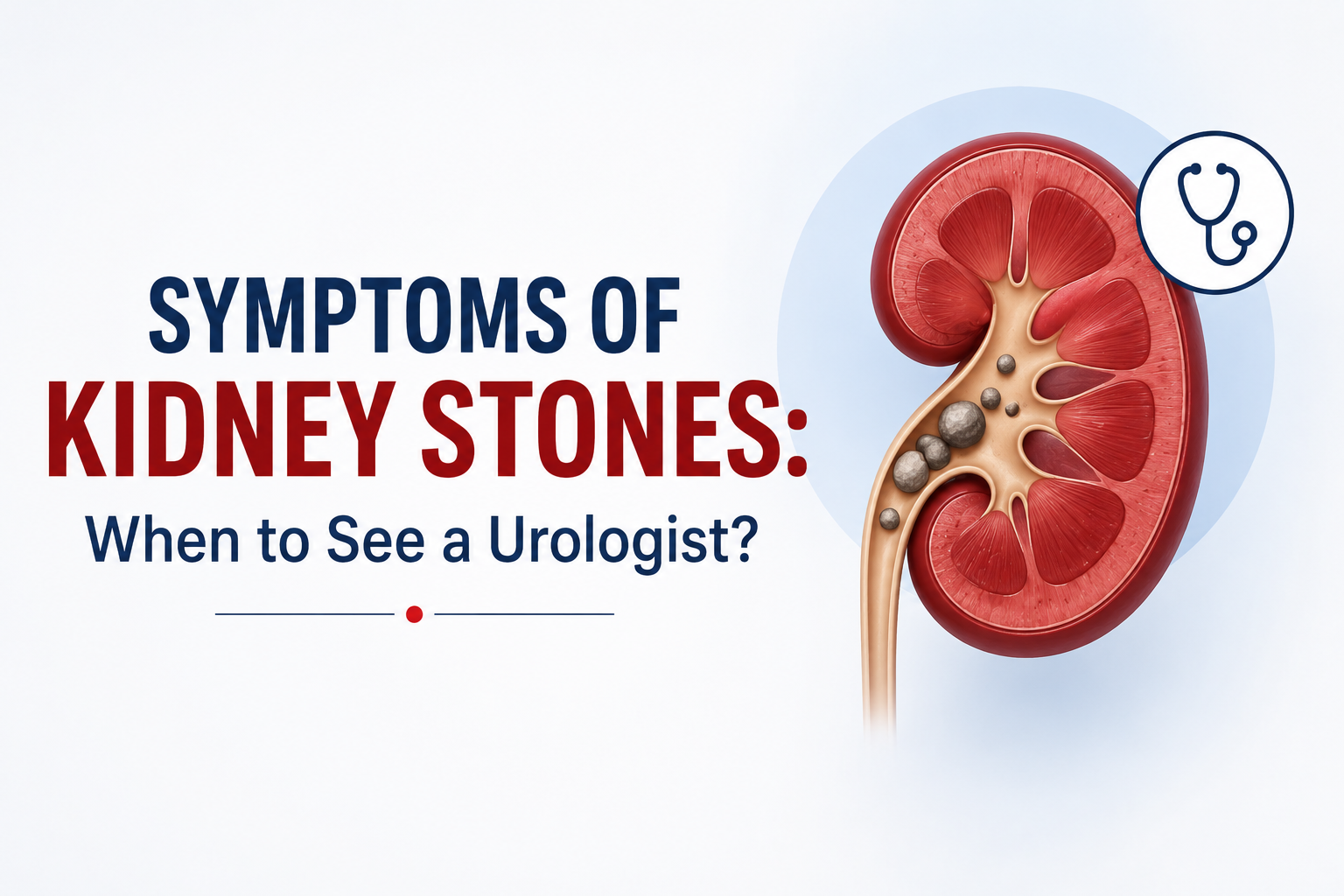
Kidney stones are a common urinary system problem. Trust us, kidney stone issues affect people of all age groups, even the youngsters. A small stone may pass through the urinary tract without causing major problems while a larger stone can cause intense pain, blockage, infection, or other complications. Knowing the common kidney stone symptoms can help you recognize when medical attention is needed. But it is important to understand that some symptoms are easy to identify, such as sudden pain in the side or back. Others, such as changes in urination, nausea, or blood in the urine can be less obvious.
Not every person with a kidney stone experiences the same symptoms. The location and size of the stone, whether it is blocking urine flow, and whether an infection is present can all affect how symptoms appear. Our blog today will explain and list down the most common kidney stone symptoms, when you should see a urologist, how kidney stones are diagnosed, and what treatment options may be considered. Before diving deeper lets understand the basics-
The most recognizable kidney stone symptoms usually occur when a stone moves through the urinary tract or blocks urine flow. Common symptoms include:
Symptoms can appear suddenly, and the intensity of pain can vary. Some people experience severe pain that comes in waves, while others may have mild discomfort.
Kidney stone pain is often described as intense or cramping. This happens particularly when a stone moves from the kidney into the ureter. The ureter is relatively narrow, so a stone can irritate its walls or obstruct the flow of urine. The pain may begin in the back or side and move towards the abdomen, groin, or genital area. One characteristic of kidney stone pain is that it may come and go in waves. The discomfort can also change location as the stone moves through the urinary tract.
Pain caused by a kidney stone is often felt on one side of the back, specifically underneath the ribs. Depending on the stone’s location, the pain may spread towards:
Men may sometimes feel pain extending towards the testicle, while women may experience pain closer to the pelvic or genital region.However, pain location alone cannot confirm a kidney stone. Several other conditions can cause similar symptoms. A medical evaluation is important when pain is severe, persistent, or accompanied by other symptoms.
Yes. Blood in the urine, known medically as haematuria, can be one of the kidney stone symptoms. As a stone moves through the urinary tract, it can irritate or scratch the lining, resulting in blood entering the urine.
The urine may appear:
Sometimes the amount of blood is too small to see with the naked eye and is detected only during urine testing. Blood in the urine should not automatically be assumed to be caused by a kidney stone. Urinary infections and other urinary tract conditions can also cause haematuria. Therefore, visible blood in the urine should be evaluated by a doctor.
Yes. A stone located in the ureter or near the bladder can cause changes in urination. Patients may experience:
These symptoms may also occur with urinary tract infections and other conditions. If you are having difficulty passing urine particularly if urine output suddenly decreases significantly, seek medical attention promptly.
Yes.Nausea and vomiting can occur along with severe kidney stone pain. It is important to understand that the urinary system and digestive system have overlapping nerve pathways, so intense pain from a kidney stone can trigger nausea or vomiting. If vomiting continues, there is an additional concern: dehydration. Patients who are vomiting repeatedly may struggle to drink enough fluids and may require medical treatment.
A kidney stone itself does not always cause fever. However, fever in a person with a suspected kidney stone can be a warning sign of infection. A blocked urinary tract combined with an infection can become a serious medical problem. Seek urgent medical attention if you experience symptoms such as:
A blocked infected urinary system may require urgent treatment to restore urine drainage and control the infection.
You should consider seeing a urologist when symptoms are severe, recurring, persistent, or affecting your daily life. A urologist should evaluate symptoms such as:
A urologist can determine whether the stone is likely to pass naturally or whether treatment may be necessary.
Some situations require prompt or emergency medical assessment. Seek urgent care if you have suspected kidney stone symptoms accompanied by:
These situations can require immediate medical intervention.
Symptoms can suggest a kidney stone, but imaging and laboratory tests are often needed to confirm the diagnosis. A doctor may recommend:
The appropriate test depends on the patient’s symptoms, medical history, age, pregnancy status, and clinical situation.
Yes. Many small stones can pass naturally through the urinary tract. The likelihood of spontaneous passage depends on factors such as:
A doctor may recommend observation, pain management, hydration guidance, and medicines in selected patients while waiting for the stone to pass. However, patients should not assume that every stone will pass naturally. Follow-up is important to confirm that the stone has passed and that kidney function and urine drainage remain satisfactory.
Surgery or a minimally invasive stone procedure may be recommended when a stone:
The choice of treatment depends on the stone’s size, location, composition, the patient’s health, and the available treatment options.
Modern kidney stone treatment includes several approaches.
The urologist will recommend the most appropriate procedure based on the individual patient’s condition.
Having one kidney stone can increase the chance of developing another in the future. Prevention depends on the type of stone and the reasons it formed.
General measures may include:
Your doctor may recommend testing the stone itself or performing specific urine tests to understand why stones are forming. Personalized prevention is often more useful than simply making broad dietary changes.
Recurring kidney stone symptoms should not simply be treated with painkillers every time they occur. Repeated stones may indicate an underlying tendency to form stones. Untreated or complicated stones can potentially contribute to:
If you repeatedly experience stone-related symptoms, consult a urologist to determine the cause and discuss both treatment and prevention.
Kidney stones can range from a minor problem that resolves naturally to a condition requiring urgent medical treatment. Recognizing kidney stone symptoms can help you seek medical attention at the right time. Sharp pain in the side or back, pain spreading towards the groin, blood in the urine, painful urination, nausea, and urinary changes are some common symptoms. However, fever, chills, severe uncontrolled pain, persistent vomiting, or significantly reduced urine output should never be ignored.
If you suspect you have a kidney stone, a urologist can evaluate your symptoms, confirm the diagnosis, determine whether the stone can pass naturally, and recommend appropriate treatment when necessary.
Early evaluation can also help prevent complications and reduce the risk of recurrent stones.
If you are experiencing kidney stone symptoms or have been diagnosed with a kidney stone, getting evaluated by an experienced urologist can help you understand your treatment options.
At Kidney Transplant Chandigarh, specialized urological and kidney care can help patients with urinary stone problems through appropriate evaluation, imaging, medical management, and minimally invasive stone procedures when required. Whether you have a first episode of severe stone pain, recurring stones, or a stone that has failed to pass, the right treatment depends on its size, location, and effect on your urinary system.
Don’t ignore persistent or severe kidney stone symptoms. Consult a qualified urologist to determine the cause of your symptoms and discuss the most appropriate treatment for your condition.
1. What are the most common kidney stone symptoms?
Common kidney stone symptoms include sharp pain in the back or side, pain that spreads towards the abdomen or groin, blood in the urine, painful urination, frequent urination, nausea, and vomiting. Some stones may cause no symptoms until they move or cause an obstruction.
2. How do I know if my pain is caused by a kidney stone?
Kidney stone pain often begins in the side or back and may move towards the lower abdomen or groin. It can come in waves and may be severe. However, other conditions can cause similar pain, so medical evaluation and appropriate testing may be necessary.
3. When should I see a urologist for a kidney stone?
See a urologist if you have severe or recurring pain, blood in your urine, repeated urinary symptoms, a known kidney stone that has not passed, or persistent discomfort. Urgent medical attention is particularly important if symptoms occur with fever, chills, vomiting, or significantly reduced urine output.
You're currently offline