Mon - Sat 10:30 AM - 04:30 PM Sunday Closed
Call Us - +91 98880 89761 info@kidneytransplantchandigarh.com

Mon - Sat 10:30 AM - 04:30 PM Sunday Closed
Call Us - +91 98880 89761 info@kidneytransplantchandigarh.com
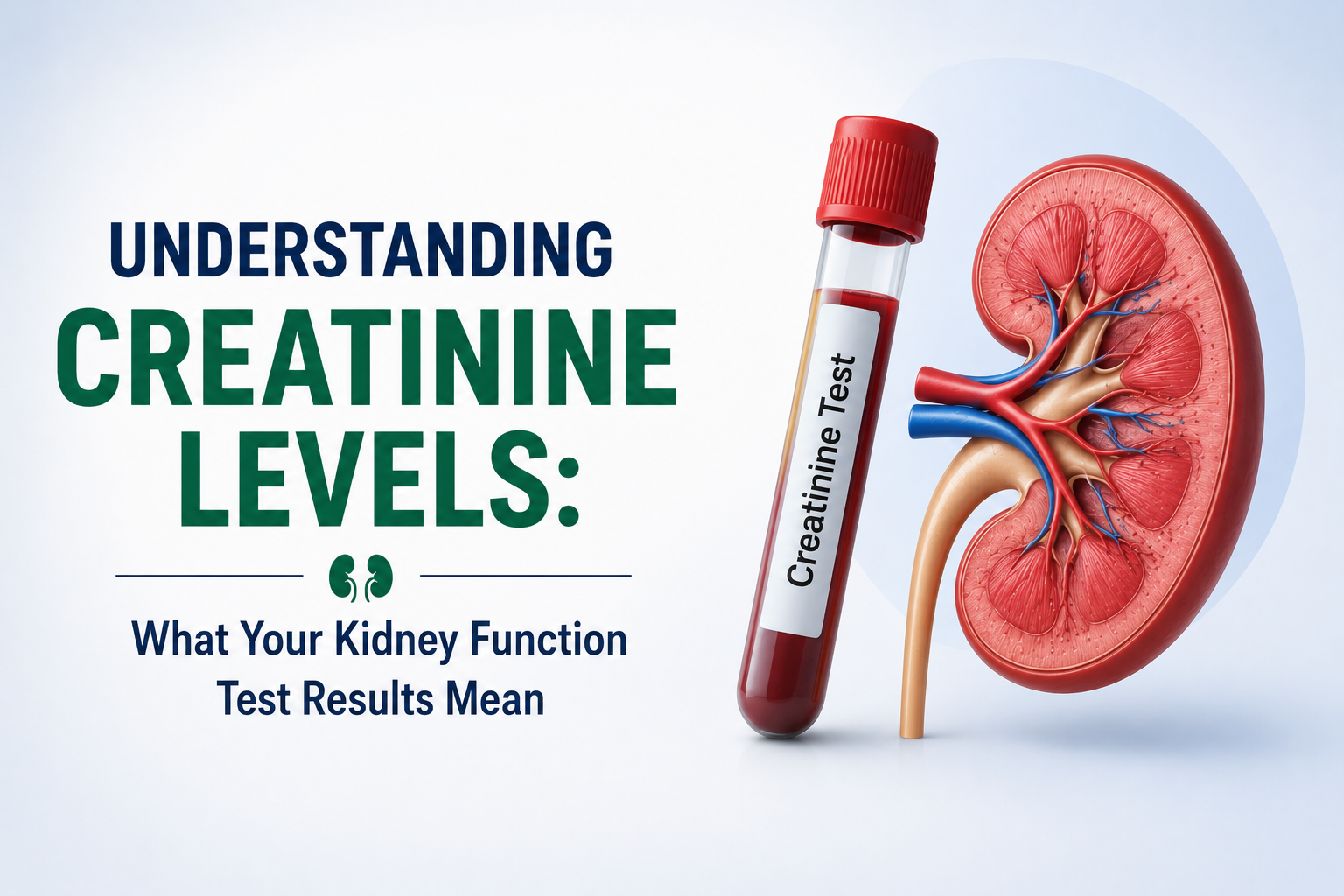
Your kidneys are performing an essential job every minute of the day. Ofcourse, they are filtering waste products from your blood, removing excess water through urine, helping you maintain electrolyte balance and supporting several other important functions in the body.
But how can you tell whether your kidneys are working properly? One of the most commonly used markers is creatinine. A creatinine blood test is often included in routine blood investigations and kidney function assessments. While the result can provide valuable information about how well the kidneys are filtering waste, understanding what the number actually means is important. A result that is slightly high does not automatically mean you have kidney disease, while a result within the laboratory’s normal range does not always guarantee completely healthy kidneys.
So, what should you make of your report?
Understanding your creatinine levels kidney function test results alongside other tests such as estimated glomerular filtration rate (eGFR) and urine albumin measurements can provide a more complete picture of your kidney health. Today, we will understand creatinine, what different results may indicate, when you should seek medical advice, and how preventive kidney care can help.
Creatinine is a waste product produced naturally by your muscles. Your muscles use a compound called creatine to generate energy. As part of this normal process, a small amount of creatine breaks down into creatinine. The creatinine then enters your bloodstream and is transported to the kidneys. Healthy kidneys filter creatinine from the blood and eliminate it through urine easily. Because creatinine production and removal are relatively consistent in most people, measuring blood creatinine can provide doctors with useful information about kidney filtration.
However, creatinine levels are influenced by several factors other than kidney function. These includes the muscle mass, age, sex, diet, hydration status, certain medications and physical activity that can also affect the overall result. That is why a creatinine result should always be interpreted in context.
A creatinine test is one of the most widely used blood tests for evaluating kidney function. Your doctor may recommend it as part of a routine health check-up or when there is a reason to suspect that your kidneys may not be functioning normally.
Creatinine testing may be particularly important if you have risk factors such as:
Doctors may also monitor creatinine in people who are already diagnosed with kidney disease to see whether kidney function is stable or changing over time. It can also be checked during certain illnesses, before some medical procedures, or when doctors need to determine whether medications are affecting kidney function.
There is no universal creatinine number that applies to every person. In adults, blood creatinine is commonly measured in milligrams per decilitre (mg/dL). A commonly used approximate reference range is:
However, these values can differ between laboratories and testing methods. Your doctor also considers individual characteristics. Someone with a greater amount of muscle mass may naturally produce more creatinine than someone with a smaller body build. Likewise, older adults or people with significantly reduced muscle mass may have relatively low creatinine levels even when kidney filtration is impaired. Therefore, don’t compare your result directly with someone else’s.
The reference range printed on your laboratory report, along with your eGFR and other findings, provides a more meaningful basis for interpretation.
An elevated creatinine level can indicate that the kidneys are filtering waste less efficiently. But it does not identify the cause by itself. Some possible causes of increased creatinine include:
Yes. Although kidney concerns are more commonly associated with elevated creatinine, low levels can also occur. Lower creatinine may be associated with:
A low creatinine result does not necessarily indicate a problem with your kidneys. In fact, in people with very low muscle mass, creatinine may sometimes appear deceptively reassuring because there is less muscle tissue producing creatinine. This is another reason why doctors do not assess kidney health using creatinine alone.
No. This is exactly not the case, this is one of the most important things to understand about creatinine testing. A raised creatinine level does not automatically mean kidney failure. Kidney function exists on a spectrum, and there are many possible reasons for an abnormal result. A temporary increase caused by dehydration for example, can be very different from a persistent increase associated with chronic kidney disease.
Your doctor may look at:
Looking at these factors together provides a much more accurate assessment.
Creatinine is often used to calculate something called the estimated glomerular filtration rate, or eGFR. The kidneys contain millions of tiny filtering units called nephrons. The glomeruli within these units help filter blood. eGFR provides an estimate of how effectively your kidneys are filtering blood. Generally, a higher eGFR indicates better filtration, although interpretation depends on the individual and the clinical context.
Broadly, an eGFR of:
These categories should not be interpreted in isolation. A single eGFR result does not necessarily establish chronic kidney disease. Duration, urine findings and other clinical information matter.
Kidney disease is not only about how well the kidneys filter blood. The kidneys also prevent important proteins from being lost into urine. When the kidney’s filtering barrier becomes damaged, a protein called albumin can leak into the urine. A urine albumin-to-creatinine ratio (UACR) can detect relatively small amounts of albumin in urine. This can be particularly useful for identifying kidney damage in people with diabetes or high blood pressure.
In other words, a person can have a relatively reassuring creatinine result but still have evidence of kidney damage through urine testing. That is why comprehensive kidney assessment often includes both blood and urine investigations.
Depending on your symptoms and medical history, your doctor may recommend several tests.
These can include:
Your doctor will determine which tests are appropriate based on your individual situation.
Kidney disease can be difficult to recognise because early stages may produce few or no noticeable symptoms. As kidney function declines, some people may experience:
These symptoms are not specific to kidney disease and can have many other causes. However, persistent or unexplained symptoms should be evaluated rather than ignored.
The number itself is important, but the change in creatinine over time can be even more informative. For example, a person whose creatinine has remained stable for years may be assessed differently from someone whose creatinine has suddenly increased compared with a recent result. You should discuss your results with a healthcare professional if:
A sudden rise in creatinine, particularly with reduced urine output, severe weakness, vomiting, swelling or serious illness, warrants prompt medical attention.
It depends on why your creatinine is elevated. If dehydration is contributing to the increase, restoring appropriate fluid balance may help. If a medication is affecting kidney function, your doctor may need to review it. If kidney disease is present, the goal is not simply to “lower the creatinine number.” Instead, treatment focuses on protecting remaining kidney function and addressing the underlying cause.
Important kidney-protective habits may include:
Do not stop prescription medicines or make major dietary changes solely to improve a laboratory number without discussing them with your doctor.
This is why relying on creatinine alone can be misleading. Early kidney disease may sometimes be associated with a creatinine level that remains within the laboratory’s reference range. Kidney damage may instead be detected through urine albumin, blood pressure changes, imaging or other clinical findings. Additionally, people with low muscle mass may produce less creatinine, potentially making the blood level appear less concerning than the actual kidney filtration status. A broader assessment can therefore provide a clearer picture.
A preventive kidney check-up can be particularly valuable for people who have a higher risk of kidney disease. You may want to discuss kidney screening with your doctor if you have:
Even when you feel completely healthy, appropriate screening can sometimes identify kidney abnormalities before noticeable symptoms develop.
Kidneys can lose a significant amount of function before symptoms become obvious. This makes preventive care particularly important. Finding kidney problems early gives doctors an opportunity to identify possible causes, control risk factors and develop a management plan before kidney function declines further. For someone with diabetes or high blood pressure, for example, regular monitoring can help identify changes in kidney health and encourage timely management. The goal is not simply to react when kidney function becomes severely impaired. It is to protect kidney health for as long as possible.
First, don’t panic. An abnormal creatinine result does not automatically mean that you have severe kidney disease. Instead, arrange an appropriate medical consultation. Your doctor may compare the result with previous reports, assess your eGFR, review your urine test, check your blood pressure and blood sugar, and consider whether dehydration, medications, illness or another factor could have influenced the result.
If necessary, additional tests may be recommended. Most importantly, avoid self-diagnosing based on a single number found on your laboratory report or online.
Your kidneys may not always give you obvious warning signs when something is wrong. That’s why understanding important markers such as creatinine and undergoing appropriate preventive assessments can make a meaningful difference.
A creatinine levels kidney function test can provide useful information, but it is only one part of a complete kidney evaluation. eGFR, urine albumin, blood pressure, medical history and changes over time all help doctors understand the bigger picture.
At Kidney Transplant Chandigarh, patients can seek specialist guidance for kidney-related concerns, evaluation and ongoing care. Whether you have received an abnormal kidney function report, have risk factors for kidney disease, or simply want to understand your kidney health better, timely professional evaluation can help you make informed decisions.
Don’t wait until kidney problems become difficult to manage. Take a proactive step towards protecting your kidney health, schedule a consultation with a kidney specialist today.
1. What creatinine level is considered dangerous?
There is no single creatinine value that is dangerous for everyone. The significance of a result depends on factors such as age, sex, muscle mass, previous kidney function, eGFR and the reason for the elevation. A rapidly increasing creatinine level can be more concerning than a stable, mildly elevated result.
2. Can dehydration cause high creatinine?
Yes. Dehydration can temporarily affect kidney filtration and increase blood creatinine. If your doctor suspects dehydration as a contributing factor, they may recommend appropriate fluid replacement and a repeat test. People with certain heart or kidney conditions may have specific fluid restrictions, so hydration advice should be individualised.
3. How can I keep my creatinine levels healthy?
There is no need to focus solely on keeping creatinine low. The goal is to maintain healthy kidney function. Managing blood pressure and diabetes, exercising regularly, avoiding smoking, staying appropriately hydrated and taking medicines only as advised can help protect kidney health.
You're currently offline